AI providers and safe web research
The world's leading language, voice and local models behind one interface; a research door that brings the web in without opening the company up.
- No vendor lock-inThe provider is a setting; the workflow and the data's address stay.
- The model fits the jobA short question goes to a fast model, heavy work to a strong one.
- Information flows one wayFrom the web into the company; company data does not go browsing.
- Every call on the ledgerCost is recorded per provider and feature.
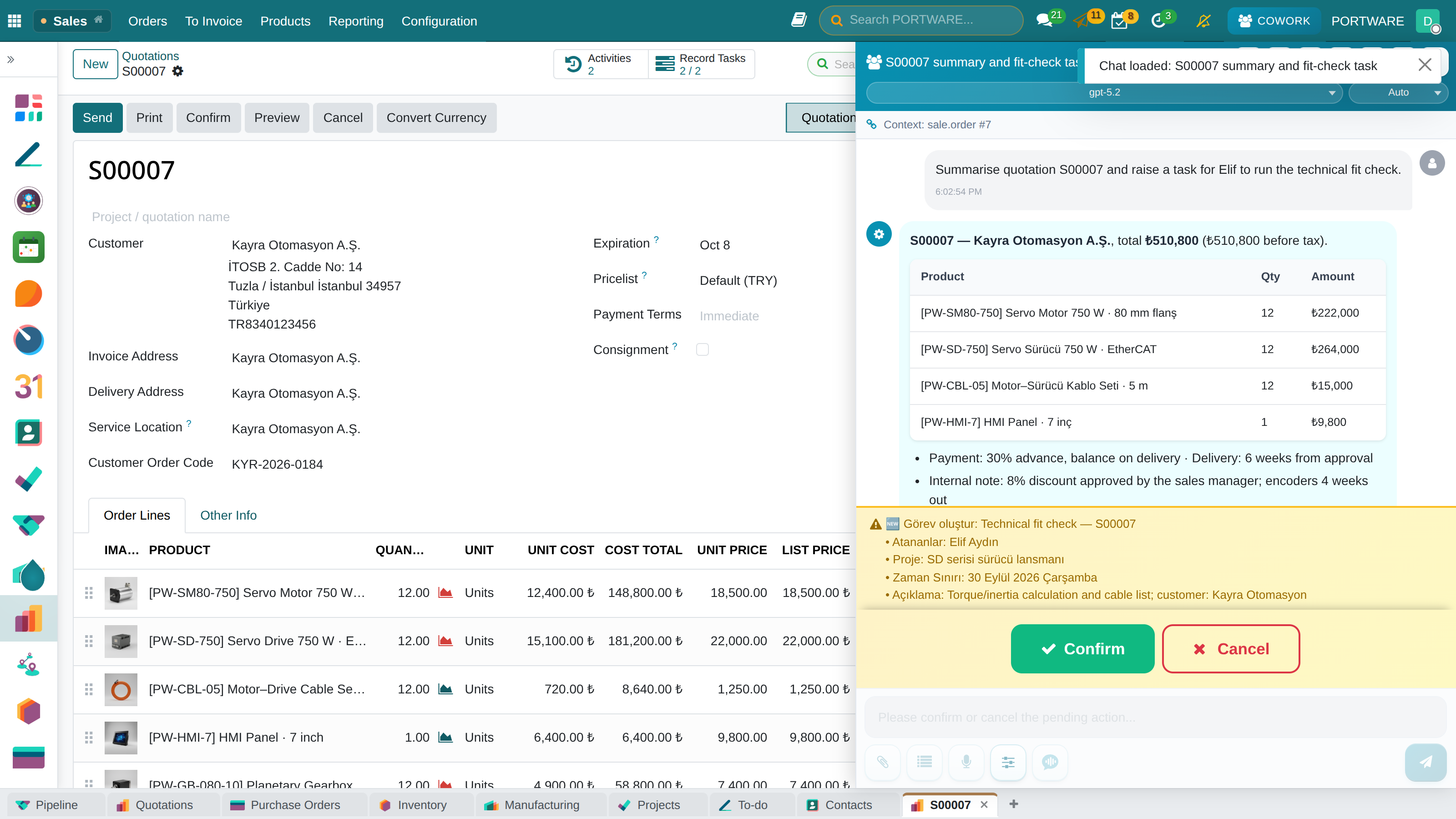
Where it appears: Settings · Cowork · the provider and spend screens · the digital team's research jobs
Connected providers
PORTWARE is not tied to one AI company. Behind the same interface:
| Area | Provider |
|---|---|
| Language models | Anthropic (Claude), OpenAI (ChatGPT), Google Gemini, DeepSeek, Z.ai (GLM), Mistral AI, Groq |
| Local model | PORTWARE Local AI (Ollama) — on your own server |
| Voice: speech to text, text to speech | ElevenLabs, OpenAI |
| Web search | Brave Search, Tavily, Serper, DuckDuckGo |
Each provider's key sits in a write-only field in Settings; a key once entered is never sent back to the browser.
Using them well
Being connected to many providers is not a value by itself; the value is in every job going to the model that does it best:
- Tiers. A short question goes to a fast, cheap model; heavy analysis or long writing to a strong one. The user does not have to choose.
- Backup. If one provider cannot answer, the turn falls to the next; the user carries on.
- A measured default. The default model is chosen by a comparative run on the same questions, not a guess, and is renewed with releases.
- Pinning. A chat can be pinned to one model; the answer bubble names who answered.
- A spend ledger. Every call's cost is recorded per provider and feature; voice use can have a daily ceiling, and every digital-team assistant has a monthly and daily budget.
- Confidential work, local model. With PORTWARE Local AI the data never leaves the server.
Safe web research
Cowork and the digital team research the web: they search, read the pages and write with sources. Information flows one way — from the web into the company.
- One door out. Every address chosen by a model or a user goes through the same door: an address policy, redirects followed one by one, DNS pinning, a size ceiling, a content-type allowlist and a per-person rate per minute. Internal networks, local services and private addresses are refused.
- The ceilings are code. These limits are constants, not settings; no setting loosens them.
- Anonymous reading. Pages are read by the server; no employee's browser session, cookie, password or browsing history travels. There is no browsing in a personal browser under a company account.
- Privacy-minded search. Searches go through the programming interfaces of services such as Brave, Tavily, Serper and DuckDuckGo.
- An external-source envelope. Text from the web reaches the model in an envelope labelled "external source", its boundaries marked with the turn's own key. An "ignore your previous instructions" line hidden in a page cannot steer the assistant.
- A refusal is an answer. A forbidden address produces "this address was not fetched — the reason", not a stack trace; the model can tell "I may not go there" from "the site is down".
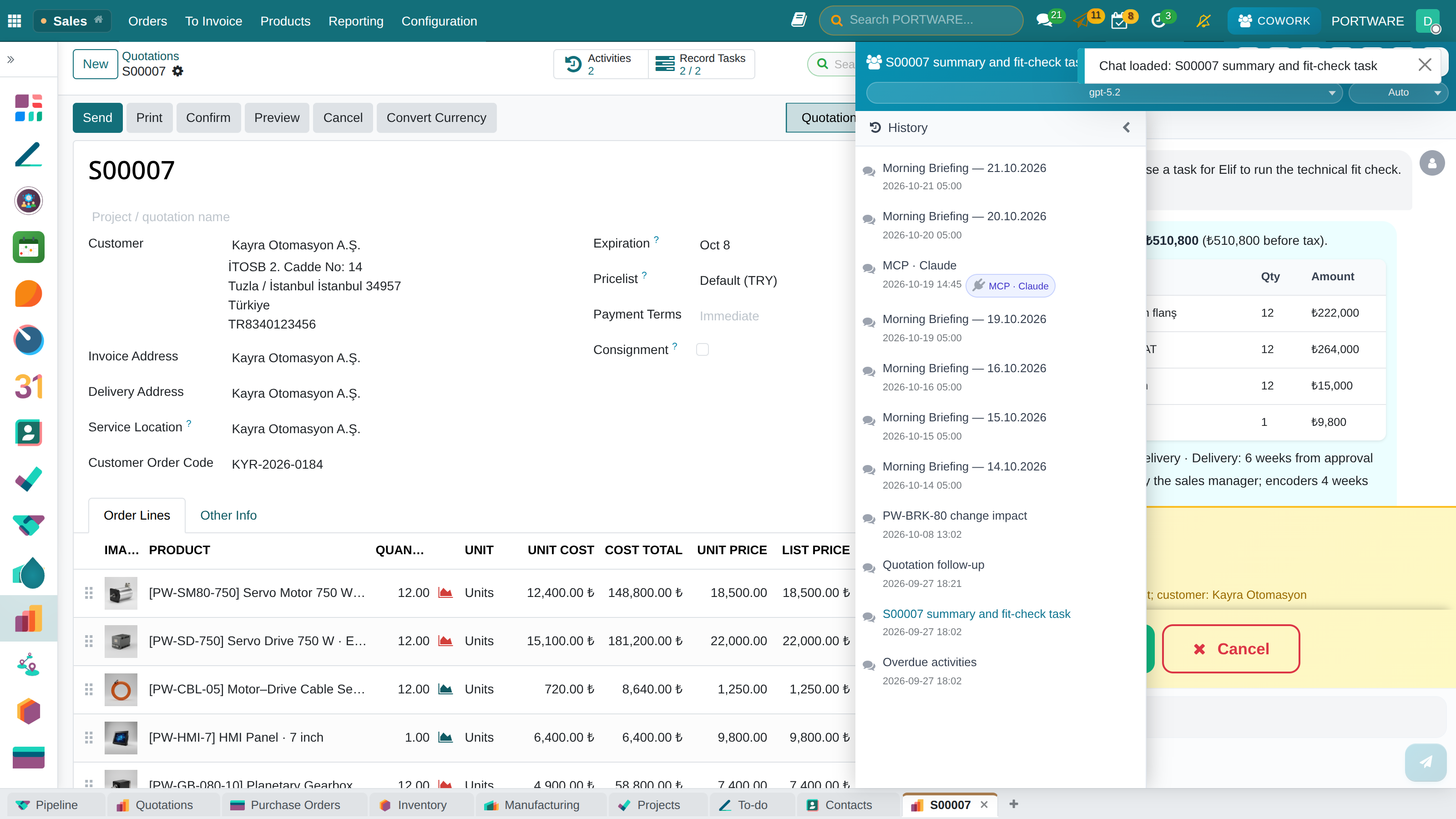
| Module | What it does | Version |
|---|---|---|
| AI COWORK | AI-powered RPA agent with multi-model pipeline and 7 AI providers + on-premise Ollama | 19.0.3.140.1 live 19.0.3.61.0 |
| PORTWARE Cowork Assistants | Digital workers that take assigned work: research, draft, watch, reconcile, summarise -- and wait for a person to decide | 19.0.3.2.1 |